Humoral medicine
The Canterbury TalesHumoral medicine is a medical framework in which bodily health and disorder arise from the condition of the four humors—hot, cold, wet, and dry—and from the symptoms produced when those qualities fall out of balance. In the book, it is more than background learning: it supplies a vocabulary for reading bodies, explains the Physician’s authority, interprets lovesickness and madness, and reduces frightening dreams to physiological causes. At the same time, its confidence in material diagnosis exists beside astrology, natural magic, and religious interpretations of suffering, making medicine one of several competing systems for explaining what happens to human beings.
Definition and Diagnostic Method
The Physician is introduced as exceptionally accomplished in medicine and surgery, but his expertise is not limited to treating visible wounds. He is “well grounded in astrology” and chooses the hours when natural magic is believed to possess its greatest power. By observing which stars are ascending, he can determine what talisman might help a patient recover. This combination of celestial timing, magical assistance, and bodily diagnosis places humoral medicine within a larger medieval system in which the human body is connected to the heavens as well as to its immediate physical condition.
His central diagnostic claim is that he knows the cause of every malady, whether it comes from heat, cold, wetness, or dryness. He also knows the symptoms associated with each humor. Disease therefore becomes legible through an ordered chain of cause and sign: an imbalance produces characteristic manifestations, and the trained practitioner reads those manifestations in order to identify the underlying disorder. The method promises explanation before treatment. The Physician’s status rests not merely on the ability to prescribe remedies, but on the conviction that illness has a discoverable root.
Lovesickness and Melancholic Madness
Humoral medicine also supplies the language used to describe a lover whose condition has become visibly abnormal. His speech and voice have changed, and he behaves moodily, as if deranged. The narrative names his condition lovesickness, or hereos, but immediately connects it with a more severe mania arising from melancholic humor. The emotional force of desire is thus represented as a bodily and mental pathology rather than as an experience that remains purely inward or poetic.
The explanation becomes anatomically specific. Melancholic humor is said to arise in the front cell of the brain, the place associated with imagining. This detail links the lover’s altered behavior to the organ that forms and sustains mental images. His distress is not presented simply as a metaphor for romantic excess: the narrative imagines a physiological process in which disordered humor affects fantasy, mood, speech, and conduct. Humoral medicine consequently makes the lover’s apparent irrationality intelligible while also showing how quickly desire can be classified as illness when it disrupts ordinary social behavior.
Dreams, Fear, and Bodily Excess
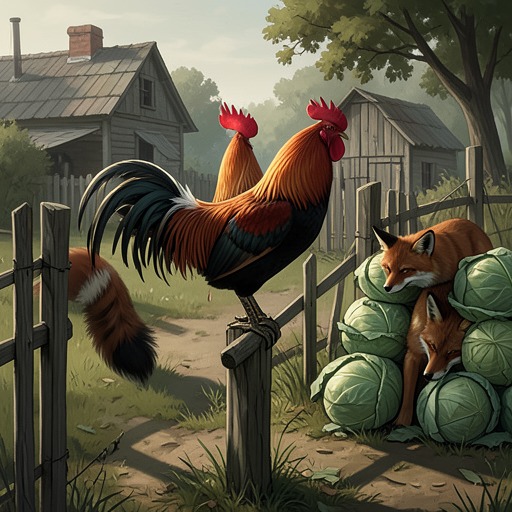
The same medical logic is applied to a frightening dream. The dream is dismissed as an illusion rather than accepted as a prophecy, and its cause is located in the body. Such dreams may result from overeating or from an excess of humors, including the possibility of gas. In the particular case under discussion, an excess of red bile is blamed for the dream’s fearful imagery.
The narrative connects this physical excess with recurring forms of dream terror: red beasts that chase and bite, fierce dogs, black bears, and bulls. Melancholic humor is likewise said to make many sleepers cry out in fear. Dream content is therefore treated as a visible or imaginable symptom of bodily imbalance. The medical explanation does not deny that the dream feels terrifying; instead, it relocates terror from the realm of supernatural warning to the realm of digestion, temperament, and humoral abundance.
Treatment and Limits of Explanation
The recommended remedy is to purge the choleric and melancholic humors. The advice is practical and urgent: treatment should not be delayed, even if the town has no apothecary. This detail emphasizes both the materiality of the illness and the vulnerability of patients whose recovery depends on access to recognized remedies. Diagnosis may be precise, but treatment still encounters the ordinary limitations of place, supplies, and time.
The Physician’s humoral practice also stands in contrast to other forms of bodily intervention appearing elsewhere in the book. Battle produces broken bones and streaming blood; long exile carries a woman for days and years across the Sea of Greece and toward the Strait of Morocco; a public scene records Constance standing pale amid danger; and a poison is carried in a box by a criminal agent. These episodes are not all explained through humoral theory, but they enlarge the field in which the book represents bodies as exposed to injury, displacement, fear, toxins, and emotional strain. Humoral medicine offers one systematic account within that wider catalogue of bodily vulnerability.
Narrative and Thematic Significance
Humoral medicine gives the book a way to connect physical condition with mental experience without treating the two as separate worlds. Lovesickness becomes a disorder of humor and imagination; madness can be traced to a bodily source; and dreams arise from excess rather than necessarily from divine or demonic disclosure. This explanatory confidence creates a productive tension with the book’s astrological, magical, and religious registers. The Physician looks to stars and talismans, while the dream explanation resists illusion and prophecy; neither approach wholly eliminates the others, but each claims authority over uncertainty.
The theory also shapes the narrative’s moral and psychological realism. A character’s altered voice, mood, fantasy, or fear can be read as a symptom with a history rather than as an inexplicable transformation. Yet the framework remains reductive in an important sense: the complexity of longing and terror is compressed into hot, cold, wet, dry, choler, or melancholy. That compression is precisely its literary power. By translating passion and fear into bodily processes, humoral medicine makes invisible suffering narratable, diagnosable, and potentially treatable, while preserving the unsettling gap between a person’s lived distress and the categories used to explain it.